


November '22
The land of the kobiz: Tan arrives to the grey great steppes of Kazakhstan
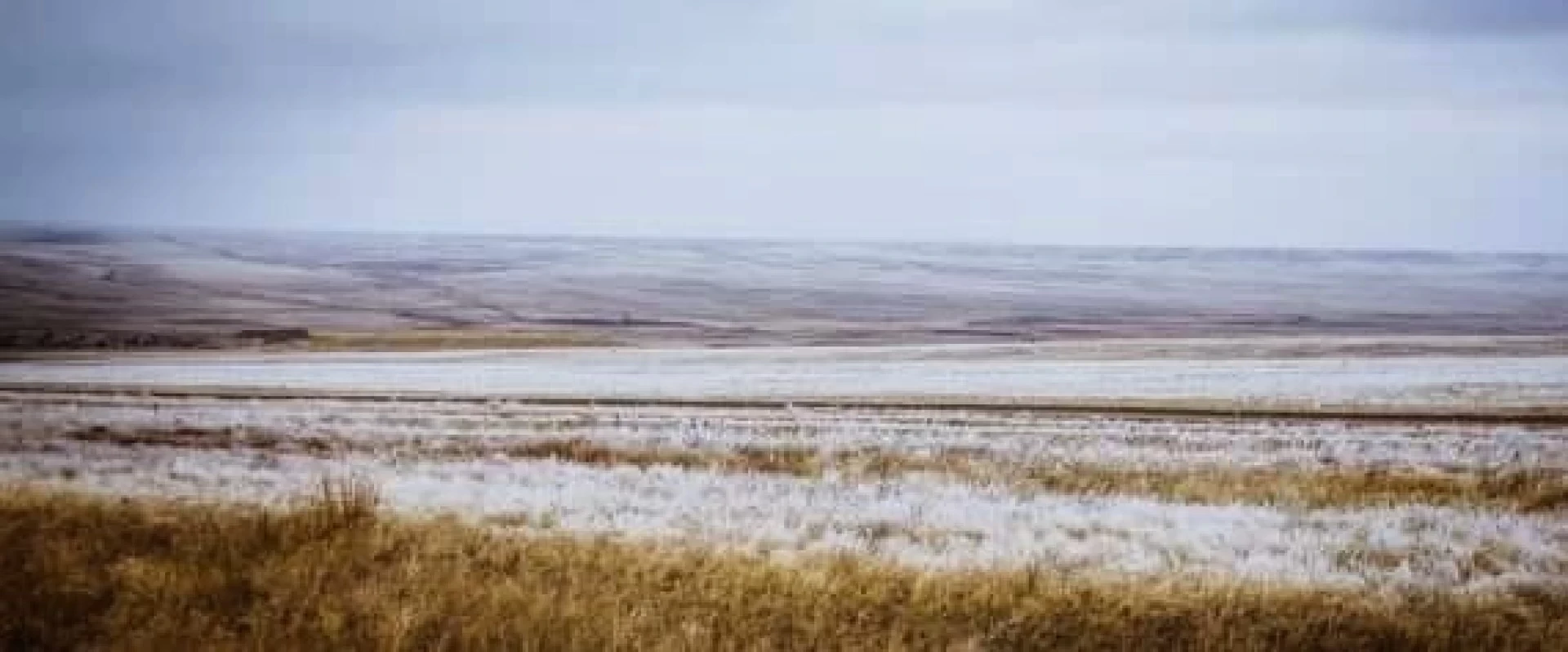
When the flocks of beburn grass sway in the gentle wind, raising their half-eyed eyes and wanting to shake their heads and titter with them, the drunken gusts of wind come and wave across that boundless, primeval, treeless, grassy plain. Bands of drunken winds bring with them the life-giving fragrance of unknown, never-seen wildflowers. The mind then wants to go mad, wants to shut up and sit, looking at the white crown of the far-off hilltop, I just think that this is a beautiful decoration of nature!
A cold old man's oldest memory Called to a melody centuries older than the oldest living man, The maddened mind, like the poet's mad melody, Wished then, Oh, that life could last forever! Kazakh people say that once upon a time there was a man named Karkit in this remote country who never wanted to die. In search of eternal life, he left his society, wandered the roads to find the way to immortality. But he saw that no life in nature can last forever, from the centuries-old whale to the thousand-year-old tree, everyone's life ends one day. With his reckless heart, he cut a whole piece of wood and made a new kind of musical instrument with two strings attached to it. It can produce sounds that no one has ever heard before. He gave his name Kabij! One day Karkit learned in an oracle that the day Kabij stopped singing, he would die, and he would die in a riot.
Karkit made a raft that day and floated in the Aral Sea, he spent the rest of his life floating in the water, he did not set foot on the raft unless it was absolutely necessary, and from getting off the raft to getting back on the raft, he endlessly sang poetry. Thus, in this land of desolate wilderness, he continued to play the melody, the maddened melody, until the day, when he was carelessly bitten by a snake and lost his dear life. But Karkit's dream came true, though he could not see it. Even though unknown hundreds of years have passed since his death, his poetry, and his melody, remain. Karkit became immortal, at least in name. The melody of poetry intoxicates people like alcohol.
The land of poets, this dark, barren wilderness of Kazakhstan is always asleep. All around was sunny, endless solitude, not the slightest sound except the constant sound of the wind. The range of mountains left behind has given the wilderness of burnt grass in front of him how much more melancholy, looking ahead in the harsh afternoon sun, it seems like a gray sea. Da Great Steps! Semipalatinsk. The names tingle. Yet it is not the solitude of this wilderness that fascinates me, but the wilderness, and beyond its borders the human addiction to destruction, the stories of the wanton killing of people in their desperate desire to keep their ideologies alive. How many thousands of years ago was the first time a person killed his own relative to achieve his own interests? That is not known. One never really knows how many billions of dreams on earth have prematurely turned into nameless, unmarked graves, or have vanished into the atmosphere. Semipalatinsk is a small reflection of the devastation of World War II.
I'm still far from Europe, but so what! Soviet Russia's nuclear weapons testing facility is blocked. Quite a tourist area, because at one time nuclear weapons were tested here. How strange! How strange all the reasons people can be attracted to something! Of course, I don't care much about that. Accustomed to avoiding tourists all my life, I can find a secluded place for myself. Although I have found the new human society to be the most adorable in my life's journey, it was a very difficult time. As far-fetched as it seems from a distance, the excuses I put myself through to get through the loneliest, most unwanted moments of my life, were quite the opposite. Over the past few months, the unbearable pain of the painful breakups with each of the people I'd come close to and loved dominated my subconscious mind, carefully avoiding people and human settlements. Maybe once a month I would go to a market and buy some potatoes, and a few days after crossing the Russian border into Kazakhstan I bought a sleeping bag from a small unknown mufsval, for a nominal price. Money was a golden deer for me then, how I lived in those days, I can't really calculate today, how did it happen! But I was definitely alive, well!
In the heart of February, as the horizon stretched across the Biburnian steppes and the vast expanse of Kazakhstan's renowned Great Steppe, I embarked on a journey that would lead me through arid remnants of the Aral Sea to the Caspian Sea's western shores. It was here, in the tranquil fishing village of Aisha Dadi's birth, that I stumbled upon a day of extraordinary significance. As if guided by fate, I found myself some fifteen hundred kilometers northeast of the Aral Sea, traversing untamed mountainous trails that lined the banks of the mighty Irtysh River. Days of exploration led me to the embrace of a city, and it was on that day that a peculiar series of events unfolded.
Descending down a gentle slope, I suddenly found myself at the heart of the city's main square. Beside a pawn shop, a captivating melody wafted through the air, reaching my ears like a magic spell. This enchanting tune possessed an otherworldly quality—a melody capable of stripping away layers of human emotion with but a note. In its presence, minds became unburdened, transported to realms far beyond the physical horizon. Enthralled, I felt my hands sway involuntarily, and my gaze wandered to the edges of the visible world.
It was at this point that a friendly stranger's laughter filled the air. In the soothing tones of Kazakh, he addressed me as "friend," and suggested a drink. I responded with a smile, innocently accepting his invitation. As we settled at a sunlit cafe table, I was handed my beloved Coca-Cola, while he opted for a can of Coke, his religion forbidding him from alcohol. His genuine innocence moved me, and our connection deepened.
Intrigued by the song, I entered the pawn shop and listened intently. The captivating voice of a young Kazakh girl echoed, singing lyrics that resonated deeply:
I know you're in love with me
I see in your eyes, in your words,
But when you come to me, you are shy,
You move like a flying leaf...
The song reached the depths of my soul, enveloping my chest in its emotional embrace. Eager to learn more, I turned to my newfound friend, questioning him about his city's name. With a chuckle, he welcomed me to Cascabula and admitted he sensed my longing for rest, evident in my tired eyes and quiet demeanor.
"You possess wisdom beyond your years, Uncle of Kaskabulak," I responded with genuine warmth. "In return for your sincerity, allow me to share with you the most beautiful love song the world has ever known." And so, I introduced him to the poignant lyrics of Baul Abdul Karim's timeless composition.
He handed me his smartphone, and after a moment, I played the soul-stirring song for him. Lost in the ethereal Kazakh sky, my words flowed freely, expressing sentiments I had never consciously spoken before. It was then that I noticed my Kazakh friend had been filming me all along.
"How about the payment, my friend?" he asked, a knowing smile gracing his lips.
Startled, I returned to the present moment, shaking my head with amusement. "Oh, money? No, I'm afraid I don't have any."
A mischievous glint sparkled in his eyes as he replied, "Who said anything about needing money?"
"It's absolutely crucial!"
'What are you doing for him?'
'Not much, really...!'
"Then where will the money come from?"
"I don't think it will just appear!"
"And how will you manage to go?"
"Let's just go...let's go, my friend!"
"But what if it doesn't work out?"
"Well, then it simply won't work out!" I chuckled heartily.
'You're quite the character!'
"Can you tell me how you'd say that in Spanish?"
"I don't know."
'Un poco loco.'
With a playful paw, he took the Coke can from my hand.
"The Creator seems to have provided unique accommodations for the insane all around the world."
'Is that so?!' I exclaimed, pulling the can back towards me.
'Indeed, my Kazakh friend's voice took on a knowing tone. I wasn't even supposed to see your pictures, but... You took pictures at the Golden Eagle Festival, right?'
'Yes, that's right!'
'A thirteen-year-old girl emerged as the victor, didn't she?'
"Yes, that's correct!"
"Stay in this town, my weary friend. You have no need to be burdened with all these thoughts. Focus on developing the images. I'll compensate you."
"Are you being honest? Will I receive payment without asking?"
'Well, you'll have to ask."
'Do you want me to?'
'No, just sit here and enjoy your Coca-Cola,' he stated promptly. 'Actually, better yet, come to my house. Consider yourself a one-day friend!'
"But before I decide, tell me, when did you first hear about the film?"
"That's the thing!"
I chose to accept my Kazakh friend's offer and spend a day at his residence. His home was located in the southern outskirts of the city, a place where no other dwelling stood nearby. A solitary motor garage stood in the vicinity, its shutter down and rusted as if untouched for years. The garage seemed almost embraced by a massive banyan tree whose name escaped me. In contrast to the traditional gar-style homes of villagers, my urban friend's house exhibited a tiled roof and walls adorned with vibrant hues.
In his cozy abode, I sat back and indulged in television. The only inhabitants were my Kazakh friend, his wife, and their fifteen-year-old son, an ardent football enthusiast. His curiosity about my knowledge of European and Latin football led him to stay by my side. Throughout that Saturday, we immersed ourselves in English, Italian, French, German, and Turkish league games, one after another, our enthusiasm unflagging.
Amidst my television engagement, my middle-aged Kazakh friend reappeared. Though I couldn't discern his origin, he showed up two nights later, bearing a generous amount of money as a feast for me. He insisted that it was mine to claim, though the exact sum eludes my memory. A cultural magazine purchased my images and article about the Golden Eagle Festival, compensating me well—an arrangement I was content with.
My fifteen-year-old Kazakh friend was a skilled cook, and he taught me the art of preparing manti with a judicious use of salt. He cleverly downplayed the purpose of reducing spiciness, as he himself could not tolerate it. His tactics left me with little choice but to acquiesce, adopting his viewpoint that the flavors of Jhalchhara Manti Surua were nothing less than a harmonious symphony.
Armed with a wealth of newfound knowledge regarding Kazakh love songs and their accompanying digital files, stored securely on my audio player's memory card, I departed Kaskabulak. Donning a Kazakhstan football team jersey, a gift from my young Kazakh friend, I carried a piece of this place with me. As I left, my middle-aged Kazakh friend handed me the jersey one last time, marking a moment of lasting connection.
The city of Kaskabulak remains etched in my memory, not solely due to the countless heartrending love songs. It was here that I first realized the Creator's provision of special accommodations for those who traverse the realm of the unconventional.
With a substantial sum in my pocket, I once again surrendered myself to the uncharted trails of the Great Steppe. After a long trek from a bustling village bazaar, I wandered aimlessly and barefoot through the landscape. I found solace in the embrace of the Aral Sea, a place where I had no intention of reentering the world I once knew. The days stretched on, seemingly endless, while the nights were brief. I reveled in the tranquility, shattered by Margarita Alvarez's memory. These nights often returned, particularly during mid-winter when the thrills of the Mongolian wilderness enveloped the landscape. As the morning, afternoon, and evening of the Great Steppe converged, I welcomed nights that stretched long, each more substantial than the day. In the silence, my thoughts danced with the memories of Margarita Alvarez. On certain autumn afternoons, as the western sky turned crimson, my emotions would overflow, tears flowing freely like a mountain stream. These poignant moments lightened my heart, akin to a piece of paper caught on a gentle breeze.
One frosty February morning, I found myself amidst an astonishing wilderness, and an unexpected chill gripped me. I'd never encountered such bone-piercing cold before. The exact moment of my falling asleep eluded my memory, much like chicks caught in the tempestuous Kalbaisakhi storm, weathering nights without a shelter. During daylight hours, visibility extended only a few meters, as if a gray curtain had been drawn around me. My mind became my ally in this perilous situation.
On the last day, my GPS delivered a precise reading. A southbound trail presented itself before my eyes like a projected image. With unwavering conviction that I was headed south, I pressed on, trudging onward blindly, covering an average of twenty kilometers per day through layers of impervious slush. This unforgiving slush enveloped me, body and soul. Fortune smiled upon me when I managed to create a fire for boiling potatoes upon finding a suitable spot. Other than those brief moments, I was too exhausted to prepare or consume food. On one occasion, I dug a hole in the ice behind a rock, using various methods to start a fire there. On another, I discovered a bush to serve as cover. The sky continued to descend as if crafted from cotton wool. At night, even the gentlest touch against the tent's fabric felt like a burn against my skin. Huddled beneath layers of a thin sleeping bag and all my clothing, I was reminded of my sleeping bag, which I had left behind with Margarita. As if a sudden waft of warmth brushed against my body, there was a fleeting moment of respite. All the hairs on my body stood on end, a sensation that defied any logical explanation.
Time ceased to hold its usual meaning, but one morning, I awoke to a brilliant light. I peered out quickly and found myself chuckling in sheer delight. The sun! It had emerged seemingly out of nowhere, casting its radiant laughter upon the world once more. A spontaneous dance of sorts ensued, my hands and feet moving to a rhythm that could only be described as a dance. I treaded on the melting snow for a while before deciding to ignite a fire and prepare eggs and khichdi. Following a satisfying meal, I allowed my stomach to become a content drum, and I surrendered to sleep until noon. I indulged in another full meal during the afternoon, succumbing to slumber once again, only to awaken in the midst of the night.
The wind whispered softly through the vast expanse of wilderness, and beyond that, there was no sound. A peculiar sensation of numbness gripped my knees, while the warmth of my breath enveloped my arms. Countless stars adorned the sky, perhaps all of them, woven into the intricate tapestry of the midnight darkness. I felt as though time had expanded infinitely, allowing me to name each star, to call them out one by one. And in a surreal moment of connection, the stars seemed to respond, twinkling as if acknowledging my recognition. It was as if they were gazing at me with a tender smile, whispering, "Love you!" In that brief exchange, I sensed the love of every star, a shared connection that overwhelmed me. Lost within this cosmic encounter, I witnessed my own eyes sparkling, my heart brimming with gratitude for every decision I had made in life.
This marked a significant juncture in my global journey. A moment where setbacks could not overshadow me, just as they had failed to deter me in the wild dreams of my youth. The same dreams that had stirred my veins and fueled my pursuit as a teenager. From that moment, I metamorphosed into a distinct entity, just as my teenage pursuits underwent a profound transformation. This was when I uncovered my purpose in life.

