


July '23
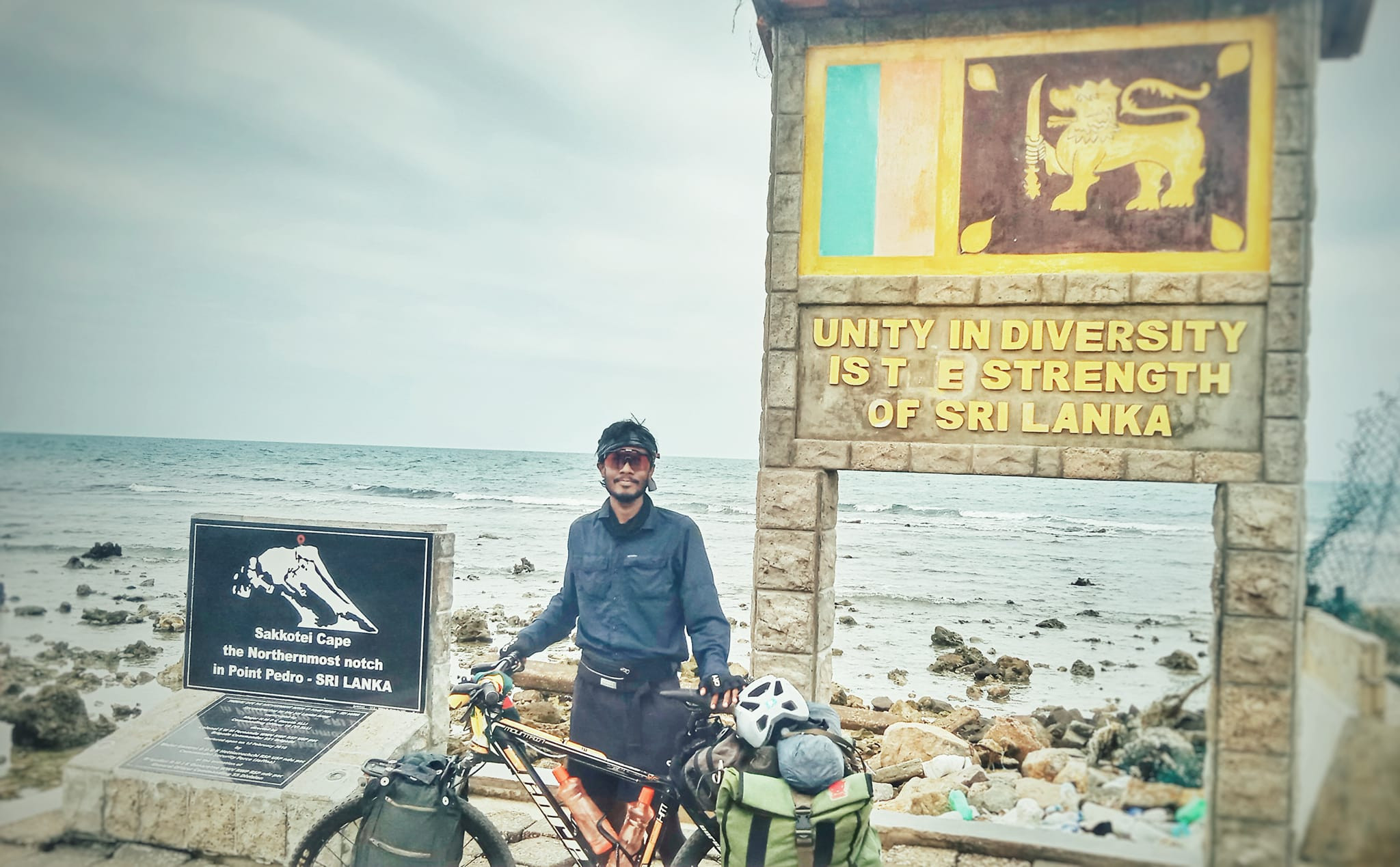
The memorable autumn day in Assam, India
Since last September, whenever the afternoon sun rises and the sky turns dark blue, memories of Jorhat come flooding back.
I was making my way back home by cycling down the hills of Nagaland and across the plains of Assam. On that particular evening, I arrived in Jorhat, Assam's second-largest city situated on the banks of the Brahmaputra River, feeling utterly exhausted. Having pedaled against the headwind along National Highway 37 all day, I sought rest in a mosque in Jorhat. That night itself, an unforgettable story unfolded.
After the evening Esha prayer, word had spread about me—a cyclist from Bangladesh who had journeyed to various places. People gathered around me, curious and intrigued. An uncle vouched for an elderly man seated nearby, proudly declaring his place of origin. "Hakim brother, come see here! See the shop next door? That man's grandfather was Bangladeshi! And that Muslim hotel? The owner visited Dhaka years ago!" I was introduced to everyone. It was as if I, the grandson of Shikdar from Shaljor village, had returned from Dhaka after a decade, and they were all ardent admirers of the Shikdar. These people, beautifully unique, displayed remarkable hospitality. Two individuals escorted me to a hotel, where I enjoyed a hearty bowl of beef and rice. The things they shared with me! Bangladesh seemed like a dream within the Muslim society of Assam.
As 10 o'clock approached, the mosque gates were to be locked. I reluctantly bid them farewell, but only on the condition that I could not leave the following day. Everyone insisted I stay, and they also needed to return to their homes. I was resolute, refusing to accept their offers. I sensed that my departure would genuinely sadden them.
Returning to the mosque floor and settling down with a book, I encountered my first meeting with my brother, Mujibur Rahman. He was the mosque's imam, exuding a cheerful demeanor. Although he had a room for himself and the muezzin, both chose to stay on the floor with me. Throughout the night, we exchanged stories about Bangladesh. The camaraderie felt as if we were long-lost friends, and the conversation flowed limitlessly.
When Mujibur Rahman Bhai called me after the Fajr Azan (dawn call to prayer), that moment remains etched in my memory. He gently tapped my shoulder and whispered, "Bhai, it's time for Fajr, Bhai, it's time for Fajr..." Rain poured continuously outside, accompanied by flashes of lightning that created a dim, surreal atmosphere. My eyes welled up as I recalled the sincerity of the people in Jorhat.
My return journey to Bangladesh loomed ahead, and time was scarce. A mere week of my new semester had already passed. Later, I discovered that my computer graphics teacher had covered almost half of the syllabus for the first mid-term exam in just two days! Upon my return, I had much catching up to do.
The next morning, I couldn't bring myself to say goodbye to the people in the market. Why leave so early? I slept on the mosque floor until the shops opened at dawn. Subsequently, I bid farewell to everyone. The drink shop had yet to open. An uncle, who had visited Dhaka thirty years ago and remembered places like Tikatuli, Motijheel, Savar, and Dhanmondi, took me to his home. Recognizing my lack of breakfast due to the journey, he sat me down in the middle of the room and presented me with a glass of water. He introduced me to his aunt and cousins. On my way back, he took me to his restaurant, where I was introduced to his eldest son, "Look, this is your brother from Bangladesh. Say hello!"
As I pushed my bike toward the highway, he walked beside me, continuing to chat animatedly. The autumn sky wore a dark blue hue, with scattered clouds gleaming bright white, creating a dazzling spectacle. Despite the scorching sun that day, I felt no heat at all. My mind was preoccupied with thoughts, occasionally glancing at the man next to me. I pondered the workload he bore, wondering who would tend to his shop and how far he would accompany me.
As we walked the final stretch together, he handed me his mobile number. Repeatedly bidding me goodbye at the Jorhat-Gohati Bararasta intersection, he remarked that we might never cross paths again, and yet his number remained. I recall his face even now, though it has started to fade.
Today, I struggle to remember his face. The sky remains dark blue, and the wind blows with a sense of ennui—a breeze carrying the aura of it's presence.

