


September '23
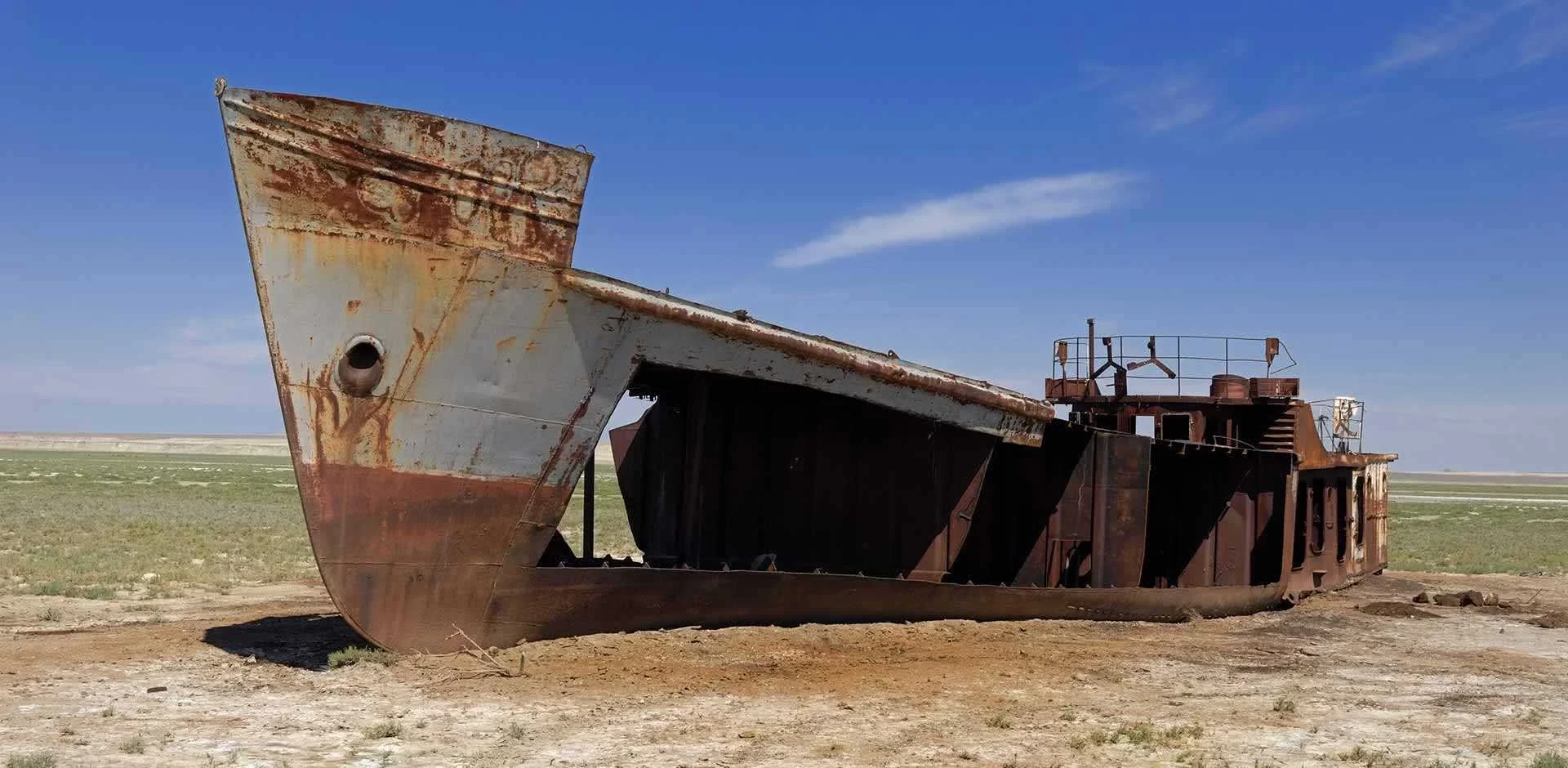
Frission Village: The village with two people ashore of the dead Aral sea
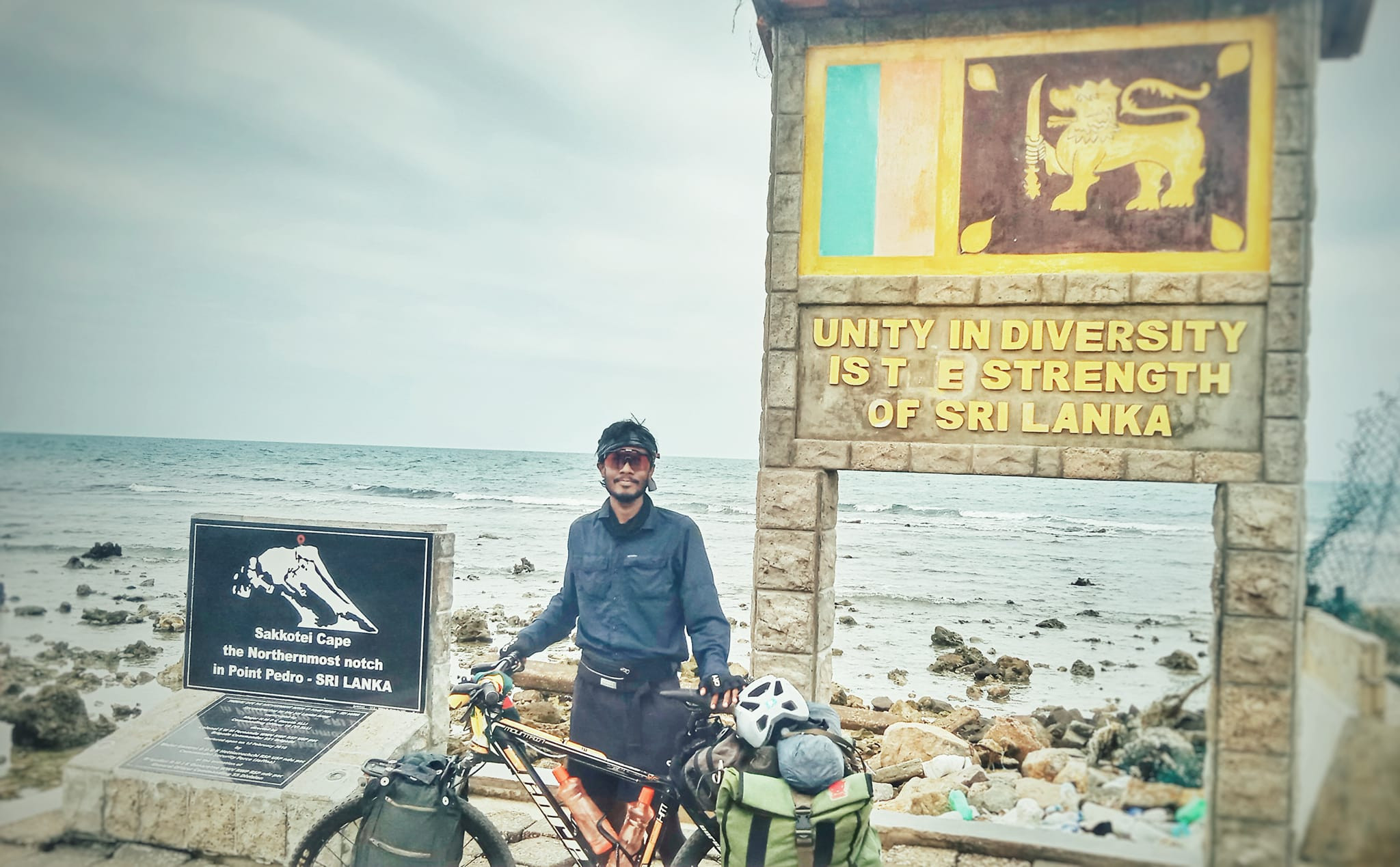
One fine autumn day, I quietly slipped out of the house without a word to anyone. My destination was Dhaka airport, and my mode of transportation was a humble bicycle. I was a mismatched, dusty, disheveled teenager, feeling a bit out of place as I settled into my economy class seat on the plane bound for Burma. In my heart, I feared that someone might approach me and ask, "What are you doing here, young man? You need to go back home." I kept waiting for the moment when the plane would touch down in Dhaka for the last time.
It felt like a dream as I disembarked at Rangoon airport. It was five in the morning, and after clearing customs, I embarked on a cycling journey towards the Thai border. My stomach was empty, and my eyes were heavy with sleep. For three days, I cycled through forests, spending nights in a simple tent. I pedaled relentlessly, never looking back, as if something ominous were chasing me, and turning back would mean being ensnared. After a week of traversing the densely wooded mountains of northern Thailand, utterly exhausted, I arrived in Vietnam with only an hour and a half left on my transit visa.
I finally stopped in front of a small refreshment shop and greeted the shopkeeper, saying, "Jin Chao, Anchai! Hung Coca-Cola lam on!" I downed a bottle of Coke, closed my eyes, and tears welled up. My eyes sparkled with a mix of emotions. The three people in the shop looked at me in surprise. In my mind, I thought, "The journey has begun, the journey has begun." With my hand in my pocket, I carefully touched the wads of notes. This was a moment that had happened two and a half years ago.
The following days were nothing short of magical. Undoubtedly, they were the sweetest days, months, and years of my youth. Memories of Margarita and Maya filled my thoughts. Those were the enchanting days spent in the mountain valleys of Mongolia. I gave my thigh a gentle pat, covered my face with both hands, shook my head, and wiped away the tears. But that was in the past. I forced my mind to shift its focus away from the sea of memories.
I glanced towards the backyard, about thirty yards away, and saw Miss Aizer looking at me with surprise in her eyes.
At that moment, I felt an overwhelming sense of gratitude towards the Creator. The Central Highway was fifty kilometers north of Frission village, and as far as I knew, there were no settlements nearby. The truck that had hit me in such treacherous weather—although I wasn't aware of it at the time—didn't stop. Perhaps the driver assumed I was dead. If that had been the case, my fragile human body might have become one with the earth in some remote, unknown valley by now. How many dreams would have vanished, lost to the world! Nature kept its secrets hidden from us—Uncle Arsene.
Around three months later, on a day when the weather had prevented him from traveling across the sea to the city he usually visited, he went to the local market. Even if he had seen me, he could have chosen to walk away, but he didn't. He came running and found me. He carried me on his shoulders for about four miles, changing cars twice along the way. Then, he borrowed a horse from a stable in a neighboring village and brought me to the Frission village.
This tale is a testament to the twists and turns of life's journey, where even the smallest details can change our destinies.
My Esperanza remained there. I asked Uncle the same question multiple times. I turned to Uncle and asked, "Didn't you see a bicycle around me? It's not just a bike; it's my whole life." But Arsene Uncle didn't see the bicycle. Even though it was close by, his mind was focused differently at that moment. He didn't have to think about anything else, and he had no desire to find anything else. The eyes are closely connected to the brain, and he couldn't even recall where he rescued me from. In the state of the white ice, the whole world seemed like a blur that day.
I found myself naked and stranded in a remote, desolate village by the dead sea, inhabited by only two people. Since I was a child, the grief of losing something dear has been unbearable for me. But one thought brought me solace - my fragile human body could have been buried in some unmarked grave or in an unknown valley by now. But it didn't happen! Life, my greatest asset, is still with me, as it has been for the past twenty-two and a half years.
A moment from my life merged with Aizer and her grandfather's life, and now it's become "our" life. I let go of everything else and focused on the present moments. Margarita Alvarez, Amir Khan Omarov, Aisha Dadi - they're all stories from different times, on different planets.
Every day, I wake up before dawn. There's no other option. When Uncle sets off with his boat, she doesn't utter a word. Still, little Izer and I rise from our beds on opposite sides of the small cottage. Aizer greets me each morning with a beautiful smile, and each time, that smile carries the same sincerity mixed with emotion. I can't be a passenger on Uncle's boat. He sails alone, scolding anyone who dares to accompany him. He firmly believes that anyone who goes to sea with him will bring bad luck. Aizer and I prepare food for Dadu - a fish sandwich, the same thing every day. On the rare occasions when he finds a couple of tomatoes or onions in Aizer's fields, we upgrade to a salad and jotte. The old man, sporting an awkward pair of black sunglasses, slowly pushes his disproportionately large fishing boat off the jetty. As far as our eyes can see, he disappears. It's almost like Uncle Arsene, a perpetual part of the scene. The first rays of daylight reflect on the barren desert chest of the Aral Sea, illuminating the gray stream. And as Uncle, with little Izer's tiny hand gripped tightly in his fist, disappears with a wave and a breath, he looks into my eyes and smiles. The gaze from those penetrating eyes struck me like a sharp dagger. I've never seen a man with eyes deeper and blacker than Aizer's. No matter his emotional state, they always burned with some unknown emotion.
The young girl asks me numerous questions, but often there's no response from me. I simply look at her and smile.
Our conversations aren't like those between people with a ten-year age gap.
"Aizer, have you ever seen a world map?" she asks.
I smile and reply, "Yes, I have."
The girl, unperturbed by the age difference, continues, "I love world maps. You know, I can even tell you the name of the neighboring country to your own. It's India. Did I get it right?"
"You got it right. Now, how far is Bangladesh from here?"
"I don't know much about distances, but I can say this: you'd have to cross many mountains of the world to reach your country."
"That's true. You're right. So, you understand that the world is much larger than the Aral Sea, don't you?"
The red-haired girl nods and says, "Yes! Sometimes, I feel like your little sister. I'm twelve years old, and I've read books by Victor Hugo, Paulo Coelho, Ernest Hemingway, Leo Tolstoy... They've taken me by the hand and introduced me to the world, all from within this locked room."
I look at the twelve-year-old girl in awe, lost for words. She grins.
"I know what you're going to say. The world is vast, and Dadu and I spend our entire lives on the shores of this small Dead Sea, right? So, tell me, what should I do? I want to travel the world like you. I want to have a horse, which I'll name 'Esperanza,' and learn about humanity from the world. But I love Dadu deeply."
She looks at me and smiles again.
"Listen, when you read books, I read your diary, sir. Not just about 'Esperanza,' but I also know about 'Margarita Alvarez.' You sometimes write in a strange alphabet that I don't understand," she confesses. "And look, there's a picture in the diary. It's you and a girl. The girl is both laughing and crying, and you're looking at her with such a beautiful smile. I think that girl is Margarita Alvarez, the Russian-Spanish-Mongolian shepherdess. Next to her name, you've written the same words in many languages - love you, love you, love you, love you..."
I had to amend the hypocritical rule that one shouldn't read other people's diaries. I quickly changed my tone and said, "But you know what makes me feel a bit better? It's been a long time since someone listened to me. I'm terribly lonely. Sometimes, I feel like I'm alone in the entire multiverse. I can't connect with the people around me. They seem like inanimate objects—seeing and hearing like me, but it's as if I have no way to communicate with them, no way at all. Margarita and Esperanza were all the joys, sorrows, and everything in my life. Neither of them is with me anymore. I love you, Aizer."
The young girl was left speechless, perhaps because my eyes appeared slightly moist. As I sat on a small sandy beach beneath the Aral Sea, I felt his hand gently on my shoulder. When he used his other hand to lift the hem of my frock and gently wipe my eyes, it wasn't just moist eyes; there were indeed tears.
"So, Aizer, you see, I have my own share of sorrows in life, I've got them! I'm just like you." Seeing that he was silent, I felt the need to continue, "I'll share many stories about Margarita and Esperanza with you. I'll even translate the stories written in strange alphabets. But first, tell me, which of Tolstoy's books have you read?"
In a hushed tone, he mentioned "Anna Karenina."
"The whole thing? At the age of eleven?"
"Yes," he replied.
"I have immense respect for you, Aizer. You're twelve, but I believe you think like a sixteen-year-old girl."
"No, no, not sixteen, not sixteen," he corrected. "Twenty-one!"
"Twenty-one?" I burst into laughter. "You're the same age as me, little one."

